How we overhauled the user interface using a tiered rollout to ensure stability and user adoption
Type of Product
Saas
My Role
Product Manager
My Contribution
Phased Rollout Strategy
Feedback Loop Integration
Bugs Management

CONTEXT
After redesigning the product's UI, we agreed with a first selected client to roll it out across their multiple markets (more than 20 countries) and points of sale (more than 2,000 stores).
Initial MVP
The two views most used by our users were prioritized, leaving the rest for future iterations.
Strategic Client
We chose a key client who helped us lay the groundwork with their feedback.
Importance of trust
We wanted to take that into account by using a process that would not undermine it.

The Process
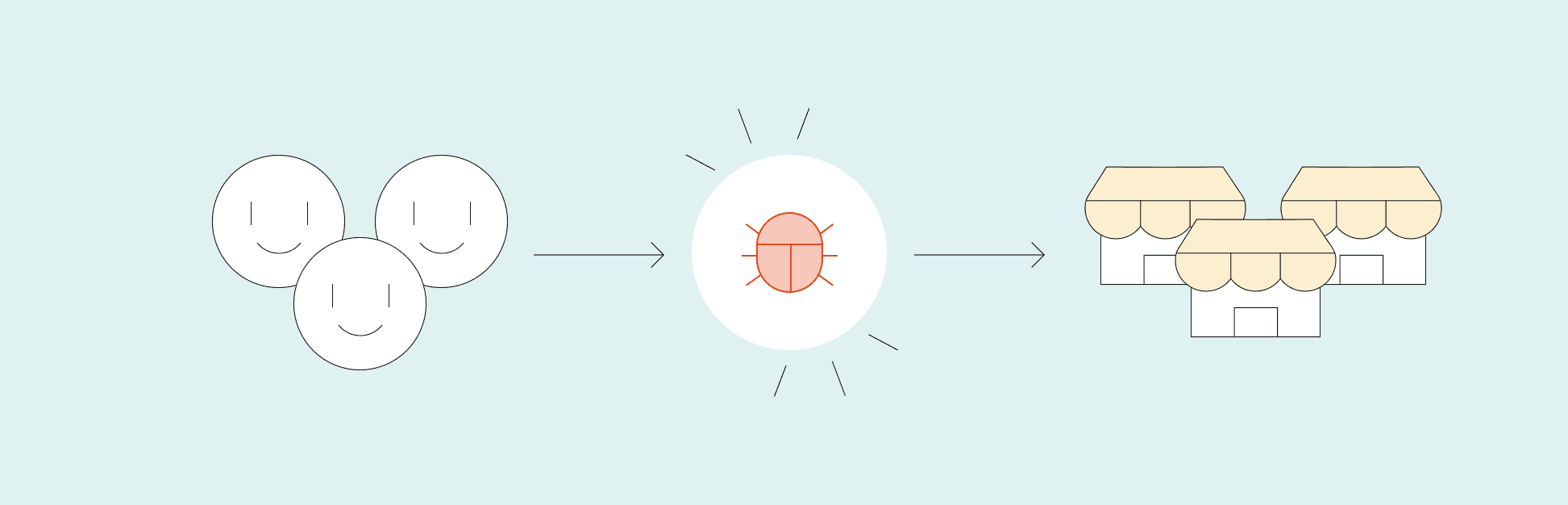
In order to reduce friction, the new interface was rolled out in stages, starting with markets that were more open to feedback and bug detection.

We took advantage of the initial stages with selected users to fix bugs and obtain feedback that strengthened the robustness of the UI and code.
Unknown flows
Identification and documentation of atypical flows specific to each market.
Client engagement
Our quick response kept the client satisfied and engaged.
Internal balance
By doing so in stages, we were not overwhelmed by the workload.

THE ROADMAP
During the first 3 months
We implemented the new UI in selected markets and users.
After bug fixes
We continued to implement it in the rest of the markets and stores in stages.
After 1 year
It took us about 1 year for all stores to use the new UI.

Results & Impact
Interface, usability, and more robust code for future implementations.
Once validated, the new UI serves as a strategic incentive for attracting new clients.